Showing posts with label Quranic sciences. Show all posts

Sunday, December 26, 2010

Lots of sleep and sudden death ....


Allah almighty ordered us to pray in night (the last third period of night) as it is considered to be the most important kind of worshiping Allah the only creator, what is the new about the importance of waking up in the night?…

Allah says in the holly Qur’an about this life:”O my people! Truly, this life of the world is nothing but a (quick passing) enjoyment, and verily, the Hereafter that is the home that will remain forever.”[Sûrat Ghâfir (The Forgiving)- verse 39]


.so, every work for not the sake of Allah is indeed worth nothing in the day of resurrection when no work will benefit human except done works for the sake of Allah. One of the great works in Islam is the prayer in night because the believer don’t sleep a lot of time as he or she is concerning about the hereafter and the day when he or she will stand in frontof Allah the creator.


But couple of years ago some studies had been published to confirm that sleeping for a long time is good and can be a reason for a long life.

Here, some kind of contradiction did occur between science and Qur’an. How can we understand the science facts while Allah orders us a reverse order to that science?


Always, we have to understand a golden rule that the Qur’an is always right even there is a contradiction between science and Qur’an because one day the rightness of the Qur’an will be clear to all people.


That calls us to claim that this scientific fact is wrong, and that what exactly happened! The new studies had confirmed that sleeping many hours may limit the life of people. According to the latest researches some American researchers did confirm that women who sleeps many hours are exposed to cardiovasculardiseases more than others who don’t sleep that much. Also another research did confirm that waking up in night Prolong life.

According to stoke medical magazine, the researchers found that there is a high probability for infecting by Ischemic Stroke which is up to 70 % between women who sleeps nine hours or more in the night.


The study was done on about 93000 women between 50 and 79 years and after seven years of researching, the researchers found that 1166 of them was subject to Ischemic Stroke which prevents the oxygen from the brain which leads to death.

Also they found that the probability of infecting by that stroke is 14% in the women who sleeps 6 hours or less and it’s 24%in women who sleeps 8 hours or more and 70% in women who sleeps 9 hours.
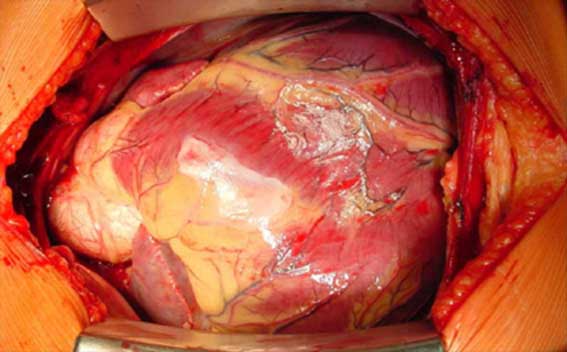
A photo for an ill heart as doctors say that long sleep helps in the disorder of heart’s muscle and there are many studies which links between the long sleep and the sudden death , also the researchers believe that waking up for half an hour at night is very useful to activate the heart and feeds it with oxygen because heart and brain may be affected by a deficit in oxygen so human may die because of that, so they advisepeople to wake up for a little time at night to activate brain and heart


Here we only say, glory to Allah! Isn’t an Islamic order which was mentioned by the prophet 1400 years ago!!! The prophet was a perfect guide for Muslim as he used to wake up at night to pray to Allah. Today, doctors and researchers advise us to follow these activities. What a great religion.


But the difference between what they do and what we do is that they do it for this life but we Muslims do it for Allah.

So, my brothers and sisters we have to follow the guidance of our prophet as it is a great worship to Allah almighty as the prophet peace be upon him told us that a one prayer at the end of the night is better than the whole world.


At the end I want to add my personal experience as I used for the last 15 years to be awake till the “Fajr” to understand the Qur’an and to figure out its meanings and I found that this increases my creation and happiness.Glory to Allah as He almighty gives me my provision from where I don’t expect because I believe in what Allah almighty tells us in the Qur’an: (And whosoever fears Allah and keeps his duty to Him, He will make a way for him to get out (from every difficulty* And He will provide him from (sources) he never could imagine)
[
Sûrat At-Talâq (The Divorce)verse 2-3].


So, don’t worry for anything and don’t say if I pray at night how can I get my provision because He almighty promised us to deliver the livelihood of all creatures even the ant as He Almighty says: (And no (moving) living creature is there on earth but its provision is due from Allah. And He knows its dwelling place and its deposit (in the uterous, grave, etc.). All is in a Clear Book (Al-Lauh Al-Mahfuz - the Book of Decrees with Allah)[Sûrat Hûd(Prophet) Hûd- verse 6].

-----------------------

By: Abduldaem Al-Kaheel

www.kaheel7.com/eng

References:

http://stroke.ahajournals.org/cgi/content/full/39/12/3185?maxtoshow=&hits=10&RESULTFORMAT=&fulltext=sleep&searchid=1&FIRSTINDEX=0&resourcetype=HWCIT

Thursday, October 7, 2010

Concept of science based on the Qur'an


The foundation of scientific thought is the sense of curiosity. People wonder how the universe and nature work, they investigate and become interested in science. But most people lack this curiosity. For them, the important things are not the secrets of the universe and nature but their own small worldly profits and pleasures. In communities where people who think in this way are in charge, science does not develop, idleness and ignorance rule.

Verses of the Qur’an called upon people to think, to investigate and to use their minds, perhaps for the first time in their lives:

Have they not looked at the camel—how it was created?
and at the sky—how it was raised up?
and at the mountains—how they were embedded?
and at the earth—how it is spread out?
So remind them! You are only a reminder.
(Surat al-Ghashiyya, 17-21)

In many other verses of the Qur’an people are instructed to examine nature and learn from it because people can know Allah only by examining His creations. Because of this, in one verse of the Qur’an Muslims are defined as people who think about the creation of the heavens and the earth:

Those who remember Allah, standing, sitting and lying on their sides, and reflect on the creation of the heavens and the earth (saying): “Our Lord, You have not created this for nothing. Glory be to You! So safeguard us from the punishment of the Fire.” (Surah al-‘Imran, 191)


As a result of this, for a Muslim, taking an interest in science is a very important form of worship. In many verses of the Qur’an, Allah instructs Muslims to investigate the heavens, the earth, living things or their own existence and think about them. When we look at the verses, we find indications of all the main branches of science in the Qur’an.
For example, in the Qur’an, Allah encourages the science of astronomy like this:

He who created the seven heavens in layers.You will not find any flaw in the creation of the All-Merciful. Look again—do you see any gaps? (Surat al-Mulk, 3)


In another verse of the Qur’an, Allah encourages the investigation of astronomy and the composition of the earth, that is the science of geology, like this:

Do they not look at the sky above them? How We have made it and adorned it, and there are no flaws in it? And the earth- We have spread it out, and set thereon mountains standing firm, and produced therein every kind of beautiful growth (in pairs)—To be observed and commemorated by every devotee turning (to Allah). (Surah Qaf, 6-8)


In the Qur’an, Allah also encourages the study of botany:

It is He Who sends down water from the sky from which We bring forth growth of every kind, and from that We bring forth the green shoots and from them We bring forth close-packed seeds, and from the spathes of the date palm date clusters hanging down, and gardens of grapes and olives and pomegranates, both similar and dissimilar. Look at their fruits as they bear fruit and ripen. There are Signs in that for people who believe. (Surat al-An’am, 99)


In another verse of the Qur’an, Allah draws attention to zoology:

You have a lesson in livestock... (Surat an-Nahl, 66)


Here is a Qur’anic verse about the sciences of archaeology and anthropology:

Have they not travelled in the earth and seen the final fate of those before them? (Surat ar-Rum, 9)


In another verse of the Qur’an, Allah draws attention to the proof of Allah in a person’s own body and spirit:

There are certainly Signs in the earth for people with certainty; and in yourselves as well. Do you not then see? (Surat adh-Dhariyat, 20-21)


As we can see, Allah recommends all the sciences to Muslims in the Qur’an. Because of this the growth of Islam in history meant at the same time the growth of scientific knowledge.

SCIENCE IN ISLAMIC HISTORY

When the Prophet Mohammed, peace be upon him, began to preach Islam, the Arabs were a community of ignorant, superstitious tribes. However, thanks to the light of the Qur’an they were rescued from superstition and began to follow the path of reason. As a result of this, one of the most astonishing developments in world history took place and in a few decades Islam, which emerged from the small town of Medina, spread from Africa to Central Asia. The Arabs, who previously could not even rule a single city in harmony, came to be rulers of a world empire.

In his book The Straight Path, the American expert on Islam Professor John Esposito describes the miraculous aspect of the rise of Islam like this:

What is most striking about the early expansion of Islam is its rapidity and success. Western scholars have marveled at it... Within a decade, Arab forces overran the Byzantine and Persian armies... and conquered Iraq, Syria, Palestine, Persia and Egypt... Muslim armies proved to be formidable conquerors and effective rulers, builders rather than destroyers. (John L. Esposito, Islam: The Straight Path, 1998, p. 33)


When different peoples, including the Turks, ecame taccepted Islam of their own free will, the Islamic empire grew even more and it bhe greatest power in the world during that period.

One of the most important facets of this empire was that it provided the stage for a scientific development previously unmatched in history. At a time when Europe was living through the Dark Ages, the Islamic world created the greatest legacy of scientific knowledge seen in history to that date. The sciences of medicine, mathematics, geometry, astronomy and even sociology were developed systematically for the first time.

Some commentators try to link this Islamic scientific development to the influence of the Ancient Greeks. But the real source of Islamic science was the experimentation and observations of Muslim scientists. In his book The Middle East, Professor Bernard Lewis, an expert in Middle Eastern history, explains it like this:

The achievement of medieval Islamic science is not limited to the preservation of Greek learning, nor to the incorporation in the corpus of elements from the more ancient and more distant East. This heritage which medieval Islamic scientists handed on to the modern world was immensely enriched by their own efforts and contributions. Greek science, on the whole rather tended to be theoretical. Medieval Middle Eastern science was much more practical, and in such fields as medicine, chemistry, astronomy and agronomy, the classical heritage was clarified and supplemented by the experiments and observations of the medieval Middle East. (Bernard Lewis, The Middle East, 1998, p. 266)


The secret was the scientific and mental discipline taught by the Qur’an to Muslim scientists. The lines written by a Muslim scientist of that period in his private diary strikingly demonstrate how much alive the Qur’an-based concept of science was:

Then for a year and half, I devoted myself to study. I resumed the study of logic and all parts of philosophy. During this time I never slept the whole night through and did nothing but study all day long. Whenever I was puzzled by a problem... I would go to the mosque, pray, and beg the Creator of All to reveal me that which was hidden from me and make it easy for me that which was difficult. Then at night I would return home, put a lamp in front of me, and set to work reading and writing... I went on like this until I was firmly grounded in all sciences and mastered them as far as humanly possible. (John L. Esposito, Islam: The Straight Path, 1998, p. 54)


Andalusia, where most Muslim scientists were born and raised, became a major centre of innovation and development especially in medicine.

Muslim physicians were trained in such varied fields as pharmacology, surgery, opthalmology, gynaecology, physiology, bacteriology and hygiene and they made important discoveries which laid the foundations of modern science. Here are some of them:

Ibn Juljul, Abu Ja'far Ibn al-Jazzar, Abd al-Latif al-Baghdadi, Ibn Sina, Zakariya Qazwini, Hamdullah al-Mustaufi al-Qazwini, Ibn al-Nafis, Ali bin Isa, Biruni, Ali Kushchu, Thabit ibn Qurrah, Battani, Ibn al-Haitham, Al-Kindi


This advanced scientific culture of the Islamic world paved the way for the Western Renaissance. Muslim scientists acted in the knowledge that their investigation of Allah’s creation was a path through which they could get to know Him. With the transfer of this mentality to the Western world, the advance of the West began.

Jul 31, 2009

harun yahya